
The Talon
Vol. 1 | Ed. 14
Do Grades Really Measure Success?
In schools across the country, grades are the main system used to decide whether a student passes or fails. On paper, it sounds simple: meet the requirements, earn the credits, and move. However, in reality, this system raises a bigger question; do grades really measure whether a student is learning or ready for the next stage of life?
Grades are meant to reflect students' understanding. Tests, homework, and quizzes all add up to a final number that supposedly shows how well a student knows the material. The truth is, grades don’t always tell the full story. A student might understand a subject deeply but struggle with test anxiety, deadlines, or personal challenges that bring their grade down. Another student might memorize information just long enough to pass a test without actually understanding it long-term. There is also the issue of pressure-when passing or failing depends on grades, school can start to feel less like a place of learning and more of a constant hassle. Students may focus more on points rather than actual knowledge, choosing what gets them a better grade instead of what helps them learn. For example, students have started AI as a way to complete assignments. The use of AI may guarantee a correct answer, but it doesn’t help students to understand the topic itself. It prevents students from learning how to solve problems just for the sake of getting a good grade.
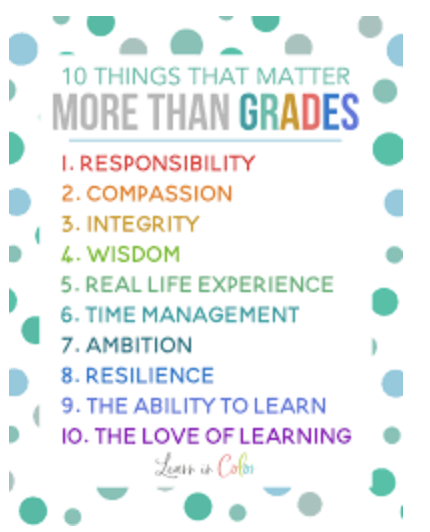
On the other hand, grades do have a purpose. They give structure, help measure progress, and make sure students are meeting basic academic standards. Without some kind of system, it would be difficult to track whether students are ready to move forward to the next level of education. Still, many argue that relying only on grades is an incomplete way to judge success. Skills like critical thinking, creativity, teamwork, and problem solving don’t exactly show on a report card, but they matter just much, if not more in the real world. In this day in age, where some job opportunities don’t require good grades, but rather skill. Some students may not be good at school, but they have skills to succeed outside of traditional academics, skills that will help them to succeed in the real world.
Maybe the real question isn’t whether grades are useful, but whether they should be the only thing deciding if a student passes school. The education system may need to change to a system that looks beyond numbers and grades to see the students, not just the score.